White Guilt Profiled in British Cinematographer
British Cinematographer has published a full feature on the making of White Guilt, tracing the film from script to screen — and putting a spotlight on the fifteen-year partnership between director Marcus Flemmings and cinematographer Haider Zafar.
The piece calls Flemmings the definition of an indie filmmaker, and the numbers explain why: a feature shot with a tiny crew in five days. White Guilt was their eighth feature together.
Chasing God’s light
The film was shot on the URSA Broadcast G2 in 4:3, documentary-style, with a deliberately rough finish. Zafar’s account of the lighting is about as independent as it gets:
“We were chasing God’s light wherever we could; we only brought in an Aputure 600D for a few setups.”
He shot on Samyang XEEN lenses, holding around T2.8, recording Blackmagic RAW onto 256GB cards to keep a five-day schedule moving.
Letting go of the storyboard
The most revealing part of the article is about method rather than kit. Flemmings had storyboarded every previous film. On White Guilt he abandoned the practice and shot on instinct, choosing lens and angle in the moment.
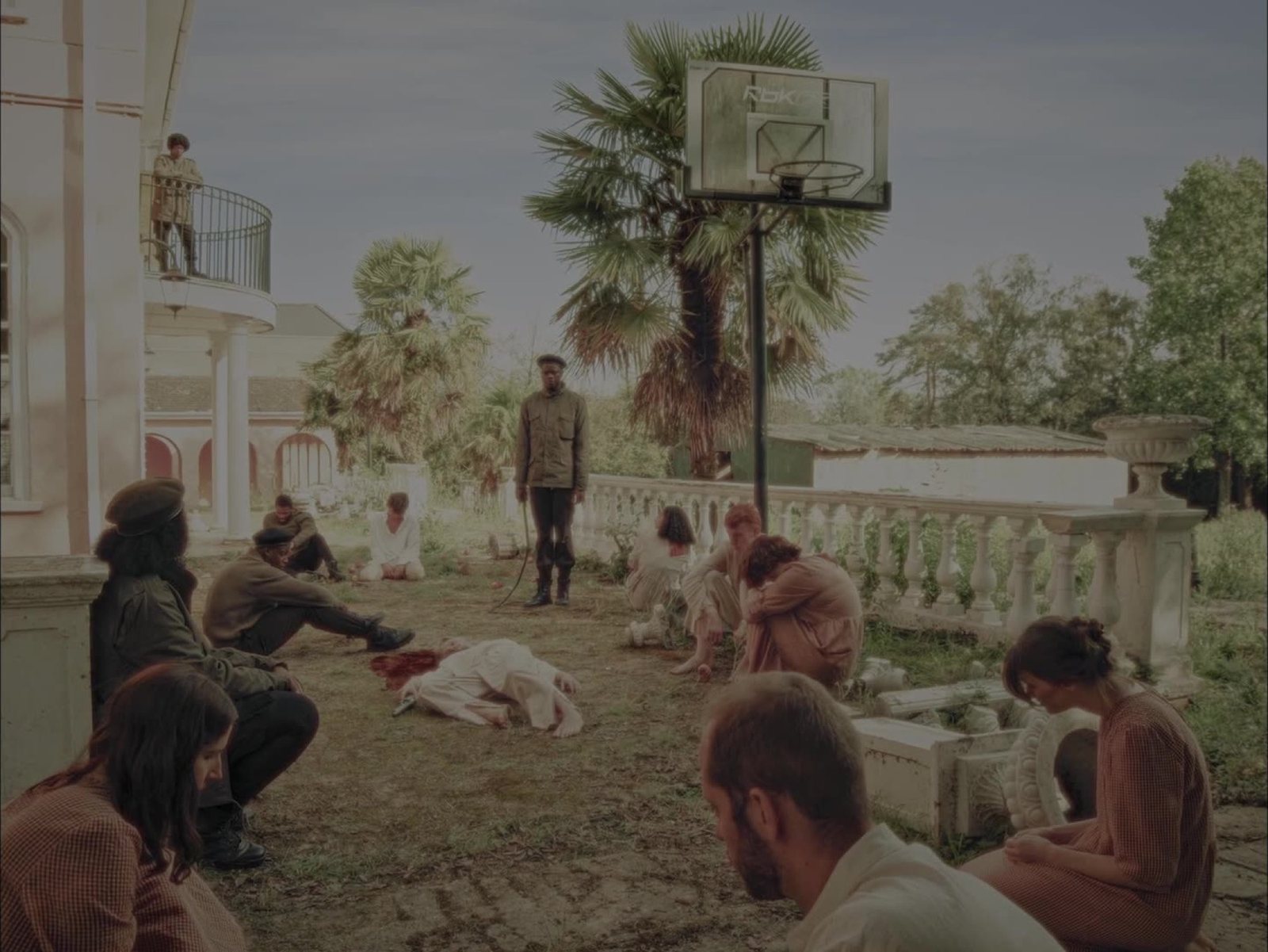
That produced the film’s most discussed image — a sunset scene, characters in a wide field before a house. Zafar wanted a tracking shot through the actors; Flemmings told him to hold back. Watching it later, Zafar agreed the restraint was right.
“Watching that scene in the cinema, the room just went quiet.”
Kent in November, passing for the Deep South
The grade was handled by Maggie Maciejczek-Potter at The Finish Line — the same facility now finishing They’re Gone. Her work turned Kent and Hertfordshire in November into the uncomfortable heat of the American South.
Flemmings cut the film himself in DaVinci Resolve before handing it to editor Mike Pike. White Guilt was produced by Zafar, Flemmings and Katya Chattwell.
Read the full feature at British Cinematographer.